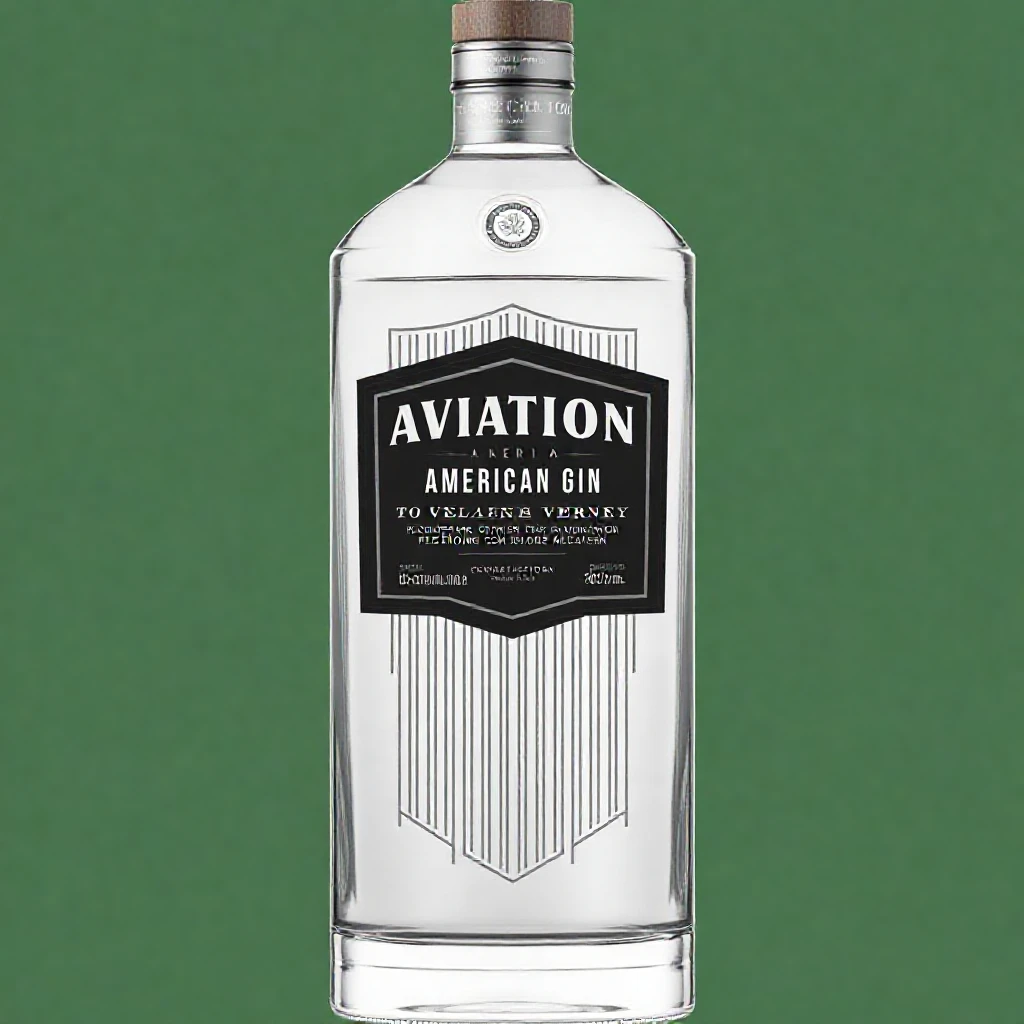
Aviation American Gin
I've kept Aviation American Gin in my bar since trying it a few years back, and it occupies an interesting middle ground in the gin landscape. Created in Portland, Oregon in 2006 by Christian Krogstad and Ryan Magarian, this American-style gin has since been acquired by Diageo, the British beverage conglomerate, which tells you something about both its commercial success and its current production scale.
What strikes me most about Aviation is its deliberate departure from the juniper-heavy London Dry template. Where many classic gins lead with pine-forward assertiveness, Aviation presents a softer, more floral character. I notice cardamom, lavender, and citrus notes more prominently than the juniper, which is present but restrained. This makes it particularly approachable for people who find traditional gins too aggressive, though gin purists might find it lacking the backbone they expect.
In practical use, I've found Aviation performs well across standard applications. In a gin and tonic, it lets the tonic's characteristics shine through while contributing gentle botanical complexity. When I make martinis with it, the result is smooth and easy-drinking, though perhaps not as architecturally interesting as martinis made with more assertive gins. The smoothness is a double-edged sword—it's forgiving and pleasant, but it can disappear in cocktails with multiple strong ingredients.
The ownership transition to Diageo is worth considering. On one hand, it ensures consistent availability and quality control at scale. The liquid in my bottle tastes the same as the bottle before it, which matters for a spirit I use regularly. On the other hand, some of the craft distillery mystique has inevitably diminished. It's no longer a scrappy Portland upstart; it's a brand in a multinational portfolio, and that affects how I think about it even if the recipe hasn't fundamentally changed.
From a value perspective, Aviation sits in a crowded middle tier. I can find it for a reasonable price relative to premium gins, but I'm also aware of excellent small-batch alternatives at similar price points that offer more complexity or distinctive regional character. What Aviation offers is reliability and wide availability—I can find it almost anywhere, which has practical advantages.
The bottle design is clean and recognizable, which matters less to me than what's inside but does make it easy to spot on a shelf. The marketing has become more prominent since the Diageo acquisition and celebrity ownership phase, which doesn't affect the liquid but does create noise around what is ultimately a straightforward, well-made product.
I continue to use Aviation in my regular rotation, particularly when making drinks for guests who might not be dedicated gin enthusiasts. It's a safe choice that rarely disappoints, even if it rarely thrills either. For someone building a home bar or looking for a versatile mixing gin, it's a solid option. For someone seeking a gin with more personality or distinctive terroir, I'd suggest exploring smaller producers.