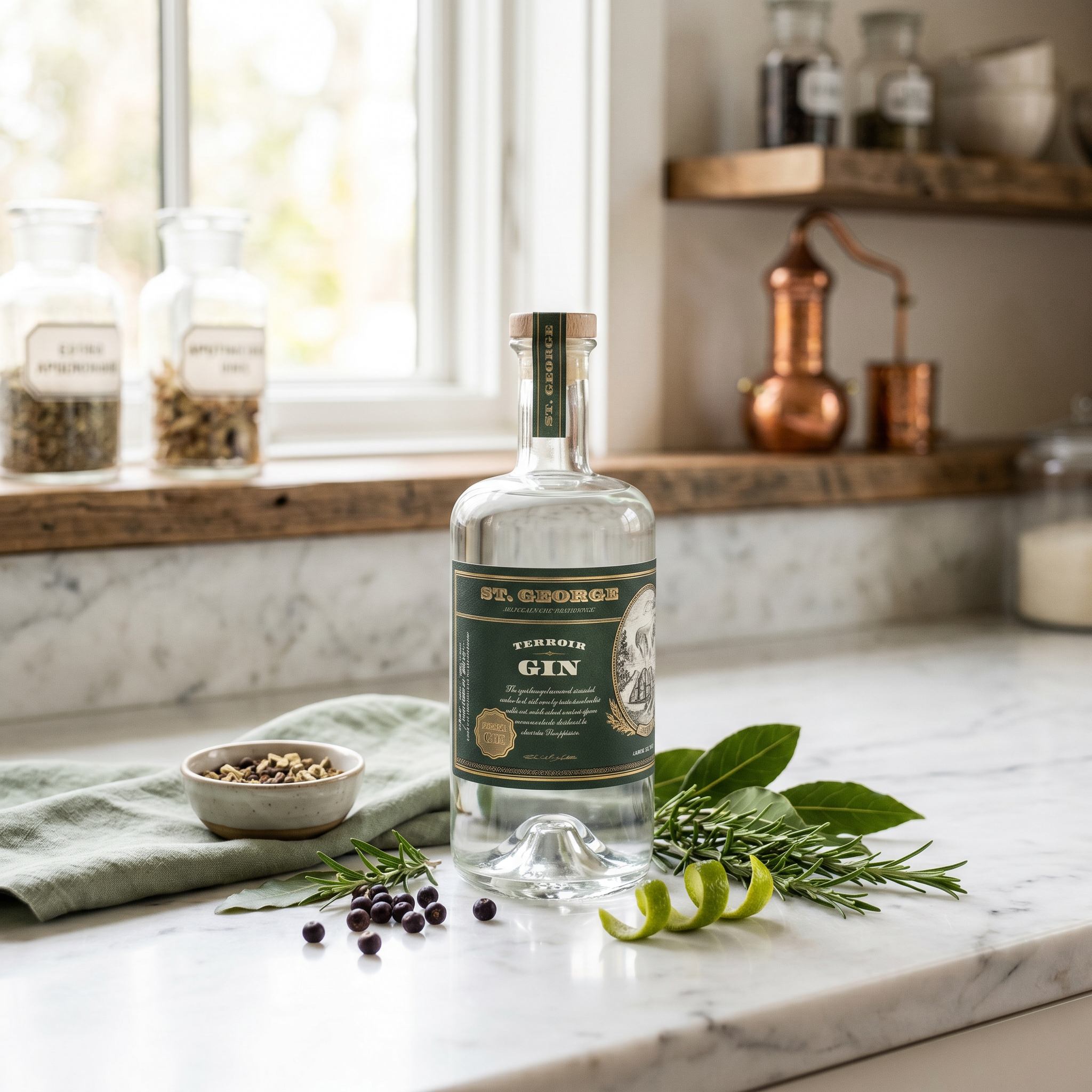
St. George Terroir Gin
A Forest Walk in Liquid Form
I approached St. George Terroir Gin with curiosity and some skepticism. The California craft distillery's concept of capturing regional botanicals in a gin sounded like it could be gimmicky, but what I found in the bottle was both more challenging and more interesting than I expected.
The first thing that hits you—and I mean hits—is the Douglas fir. This isn't a subtle background note. It's an assertive, resinous pine character that dominates the nose and follows through on the palate. If you grew up hiking in Pacific Northwest forests, you'll recognize it immediately. If you're expecting a London Dry profile with crisp juniper leading the way, you'll be confused. The juniper is there, but it's playing second fiddle to the forest floor.
Beyond the fir, I noticed California bay laurel adding an herbal, slightly eucalyptus-like quality, and coastal sage contributing an earthy, almost savory dimension. There's also coriander and a bit of citrus in the background, but they're supporting players. This botanical lineup creates something that tastes genuinely tied to a place, which is rarer than distilleries claiming it.
In a classic gin martini, Terroir performs admirably. The bold botanical profile stands up to vermouth without being buried, and the pine notes add an intriguing twist to the familiar template. I found myself enjoying it quite a bit in this application. However, when I tried it in a gin and tonic, the results were less successful. The quinine and pine seemed to compete rather than complement, and the distinctive botanicals got muddled rather than highlighted.
The texture is smooth at 45% ABV, with no harsh alcohol burn. St. George's distillation skill is evident—this isn't a rough craft product trading on novelty alone. The technical execution backs up the ambitious botanical concept.
My main reservation is about versatility. This isn't a workhorse gin that does everything well. It's a specialist bottle that excels in specific contexts and falls flat in others. For someone building their first gin collection, I'd probably recommend starting elsewhere and adding Terroir later as an interesting accent piece.
The price point, typically in the mid-to-high $30s, feels appropriate for what you're getting. It's more expensive than mass-market gins but less than some of the ultra-premium bottles that don't offer this level of distinctiveness.
Terroir succeeds at what it sets out to do: capture a specific sense of place in a bottle. Whether that place is somewhere you want to visit regularly depends on your palate and how you plan to use it. I respect the craftsmanship and enjoy having it in my collection for particular moods and drinks, even if it's not my daily reach.