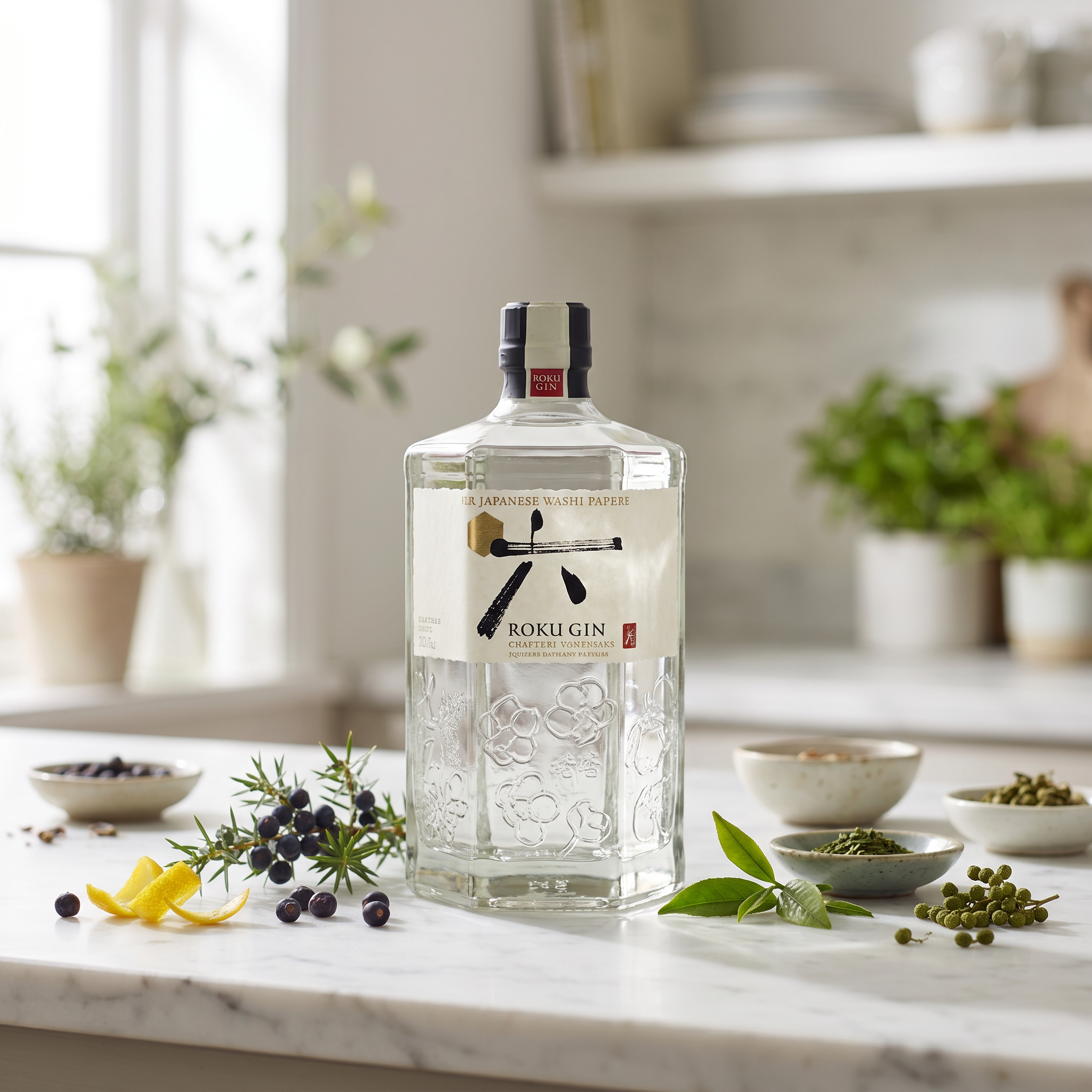
Roku Gin
My Experience with Roku Gin
When I first encountered Roku Gin, I was immediately drawn to its promise of Japanese botanical ingredients—a departure from the juniper-forward London Dry style I'd grown accustomed to. After mixing and tasting it multiple ways over several months, I've developed a clear sense of where this gin excels and where it doesn't quite meet expectations.
The Botanical Approach
Roku uses six Japanese botanicals (roku means "six" in Japanese): sakura flower, sakura leaf, yuzu peel, sencha tea, gyokuro tea, and sansho pepper, alongside more traditional gin ingredients. This isn't just marketing—I genuinely taste the difference. The sakura brings a delicate floral quality without the soapy perfume notes that plague some floral gins. The yuzu adds a citrus character that's more complex than simple lemon peel, with an almost aromatic quality. The teas contribute an earthy undertone that grounds the lighter botanicals.
What strikes me most is the restraint. This isn't a gin screaming for attention. The juniper is present but takes a back seat, which means if you're expecting a classic pine-forward gin, you'll be surprised—possibly disappointed. I appreciate this subtlety, but I understand why some gin purists might not.
In Practice: Mixing and Drinking
I've tested Roku in gin and tonics, martinis, negronis, and neat. It performs best in drinks where it has room to breathe. A simple G&T with a quality tonic water lets those Japanese botanicals shine—I typically add a grapefruit twist to complement the yuzu notes. The result is refreshing and sophisticated.
In martinis, however, I found the delicate profile gets somewhat lost, especially if you're using a strongly flavored vermouth. It works, but bolder gins make more of a statement here. In a negroni, the Campari largely overwhelms Roku's subtleties, which feels like a waste of its unique character.
Neat or on ice, Roku is pleasant but not exceptional. At 43% ABV, it has enough body to sip slowly, and I don't get harsh alcohol burn. But I wouldn't choose this over a truly premium sipping gin if that's my intention.
The Value Question
The pricing typically places Roku in the $28-35 range for a 750ml bottle, depending on the market. That's firmly premium territory, though not super-premium. Given the unique botanical profile and the quality of execution, I think the price is defensible. You're paying for something genuinely different, not just another London Dry in fancy packaging.
That said, I've found excellent craft gins at similar prices that offer comparable complexity. The value proposition here depends on how much you prize that specific Japanese character. If you're curious about how Japanese ingredients transform gin, the price is reasonable. If you're just looking for a solid premium gin without particular interest in the Japanese angle, you might find better values elsewhere.
Final Thoughts
Roku Gin occupies an interesting space: accessible enough to find at most liquor stores, distinctive enough to offer something different from the usual suspects, but subtle enough that it won't work in every application. I keep a bottle on hand specifically for gin and tonics and simple highballs where its character can shine. For a well-stocked home bar looking to expand beyond standard offerings, it's a worthwhile addition—just know what you're getting into.